
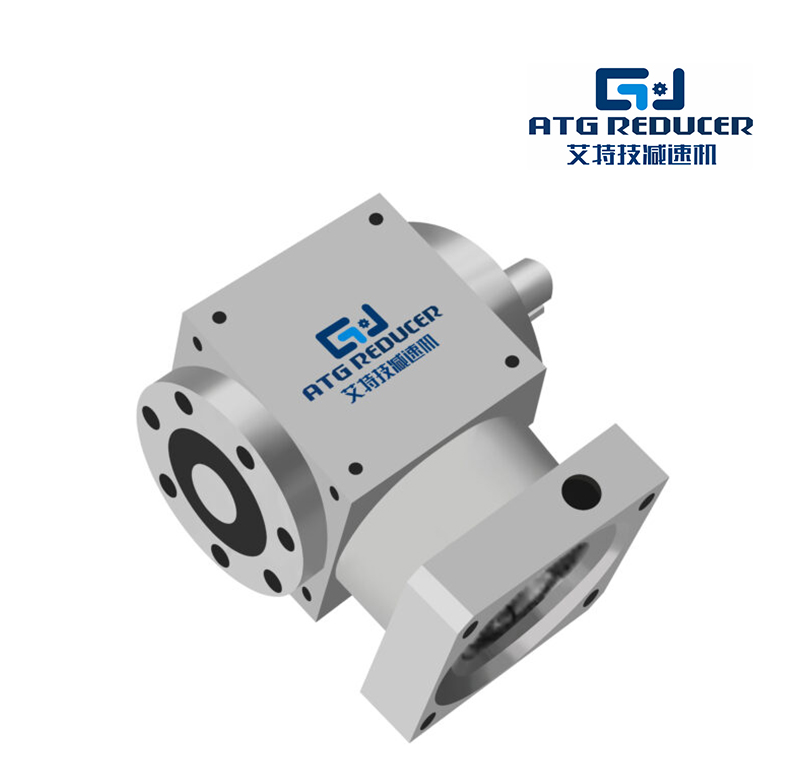
A Custom Hollow Rotary Platform for Automation Equipment is a precision motion control solution designed to support rotary positioning, indexing, and synchronized automation tasks while allowing cables, air lines, sensors, and other utilities to pass through the center of the unit. In modern industrial automation, the demand for compact, high-accuracy, and flexible rotary mechanisms continues to grow. A custom hollow rotary platform helps solve space constraints, reduces external wiring complexity, and improves machine integration across a wide range of applications.
This type of platform is widely used in automated assembly systems, robotic workcells, packaging machines, inspection equipment, semiconductor handling systems, laser processing machines, and test automation platforms. By combining a hollow center design with precise rotation control, the platform supports cleaner machine architecture, easier installation, and better performance in systems that require repeated rotary motion. For manufacturers and system integrators searching for a dependable motion module, the custom hollow rotary platform offers a highly adaptable and efficient solution.
A custom hollow rotary platform is a rotary motion stage engineered with a central through-hole or hollow shaft structure. This design allows passage for pneumatic tubing, electrical cables, fiber optics, coolant pipes, and sensor wiring without interference from the rotating mechanism. Unlike conventional rotary tables that require external cable routing, a hollow rotary platform simplifies system design by concentrating utilities through the center.
The word custom is important because automation equipment often requires specific sizes, load capacities, rotational ranges, mounting patterns, motor configurations, and control interfaces. A custom hollow rotary platform can be tailored to match application-specific requirements such as torque output, repeatability, speed, accuracy, and environmental protection. This flexibility makes it especially valuable in automated production lines where standard components may not fit the machine layout or process demands.
In essence, a hollow rotary platform combines the functions of a precision rotary table and a utility pass-through channel. It is built to improve motion efficiency, reduce assembly complexity, and provide stable rotation in demanding industrial environments.
The hollow design is one of the main reasons this type of platform is widely adopted in automation systems. Traditional rotary devices often require all cables and lines to be routed around the outside, which can create problems such as cable twisting, clutter, wear, limited movement, and difficult maintenance. A hollow rotary platform for automation equipment solves these issues by enabling internal routing through the center.
Key advantages of the hollow structure include:
In high-throughput automation equipment, every millimeter of space matters. The hollow center design helps maximize usable machine area while allowing rotary motion to remain smooth, precise, and repeatable.
A custom hollow rotary platform is more than just a rotating stage. It performs several important functions in automation equipment:
Because the platform can be integrated with servo motors, encoders, gear mechanisms, and precision bearings, it is suitable for motion processes that require both dynamic movement and stable holding performance.
Custom hollow rotary platforms are used in a wide variety of automation sectors. Their adaptability makes them suitable for both general-purpose machinery and highly specialized production systems.
| Application Area | Typical Use Case | Main Benefit |
|---|---|---|
| Industrial Automation | Part transfer, rotary indexing, synchronized process stations | High efficiency and compact machine integration |
| Robotics | Rotary positioning for robotic cells and end-effector support | Flexible motion control with central cable routing |
| Packaging Machinery | Labeling, filling, sealing, and sorting systems | Fast cycle motion and reduced cable interference |
| Electronics Assembly | PCB handling, component inspection, and test stations | Precision rotation and clean utility routing |
| Semiconductor Equipment | Wafer handling, inspection, and transfer modules | High accuracy in compact, controlled environments |
| Medical Automation | Diagnostic device movement, sample handling, lab automation | Stable motion with organized cable management |
| Laser and Vision Systems | Rotary alignment, scanning, and inspection positioning | Precise angular control and reduced vibration |
| Testing and Measurement | Rotary fixtures, durability testing, sensor validation | Repeatable positioning and easy integration |
When comparing different rotary motion solutions, the custom hollow rotary platform stands out because it combines precision, flexibility, and installation efficiency. Below are the most important advantages for automation equipment designers and end users.
A custom hollow rotary platform can be engineered to fit the exact dimensions and performance targets of a machine. This means it can be built with the right center opening size, flange dimensions, mounting holes, motor interface, and control options needed for a specific automation project.
Routing cables through the hollow center simplifies the internal layout of automation equipment. This reduces the risk of cable tangling, bending fatigue, and mechanical interference, which are common problems in rotating machinery.
Because utilities pass through the center, engineers can build more compact systems. A compact design is particularly important in production lines where space is limited and multiple stations must be placed close together.
The reduced exposure of cables and hoses contributes to longer service life and fewer unexpected failures. The platform also helps keep moving components separated from utility lines, improving overall system reliability.
A high-quality hollow rotary platform is designed for accurate angular positioning, stable indexing, and consistent repeatability. This makes it suitable for precision automation tasks where even small positioning errors can affect product quality.
A well-designed custom platform can simplify inspection and maintenance. Central routing often makes the machine easier to organize and troubleshoot, especially when compared with systems that use many external loops and cable carriers.
These platforms can be adapted to various control systems, including servo-driven automation, PLC-based production lines, and robot-assisted systems. The ability to match many machine architectures makes them highly versatile.
Although designs vary, most custom hollow rotary platforms for automation equipment include several core components that determine performance, load capacity, and durability.
| Component | Function | Design Consideration |
|---|---|---|
| Base Frame | Supports the full rotary unit and interfaces with the machine structure | Rigidity, mounting pattern, and vibration resistance |
| Rotary Table / Moving Plate | Holds the workpiece, fixture, or process tooling | Flatness, stiffness, and load distribution |
| Hollow Shaft / Center Bore | Allows routing of cables, hoses, and utilities | Bore diameter and clearance for moving parts |
| Bearing System | Supports rotation and load bearing | Precision, friction, and service life |
| Drive Unit | Provides rotational power | Torque, speed, and compatibility with control system |
| Encoder / Sensor | Measures position and motion feedback | Resolution, accuracy, and signal stability |
| Housing / Cover | Protects internal parts from dust and impact | Environmental sealing and accessibility |
When selecting or specifying a custom hollow rotary platform for automation equipment, several performance characteristics should be evaluated carefully. These characteristics influence whether the platform can meet the mechanical and control requirements of the application.
| Performance Parameter | What It Means | Why It Matters |
|---|---|---|
| Rotation Accuracy | The degree to which the platform reaches the intended angle | Critical for precise assembly, inspection, and alignment |
| Repeatability | Ability to return to the same position consistently | Essential for stable automation processes |
| Load Capacity | Maximum weight the platform can support during operation | Determines suitability for heavy fixtures or workpieces |
| Torque Output | Rotational force generated by the drive system | Affects acceleration, stopping, and load handling |
| Rotational Speed | How fast the platform can rotate | Impacts cycle time and production throughput |
| Center Bore Size | Internal opening for utilities and components | Important for cable routing and equipment layout |
| Backlash | Small movement lost during direction changes | Lower backlash improves motion precision |
| Stiffness | Resistance to deflection under load | Helps maintain accuracy during dynamic operation |
| Duty Cycle | How often and how long the platform can run | Affects thermal performance and system longevity |
One of the biggest benefits of a custom hollow rotary platform is the ability to tailor the design to the needs of a specific machine. In automation projects, standard parts are not always enough. Customization allows the platform to fit the exact process, layout, and performance target.
Common customization options include:
By tailoring these elements, automation engineers can build systems that are more efficient, more stable, and easier to maintain over time.
The drive and control system has a major impact on how a hollow rotary platform performs. Different automation environments require different levels of speed, precision, and holding torque.
| Drive / Control Type | General Description | Typical Use |
|---|---|---|
| Servo Motor Drive | Uses closed-loop feedback for precise motion control | High-accuracy automation and fast indexing |
| Stepper Motor Drive | Moves in defined steps for simple position control | Cost-sensitive systems with moderate precision needs |
| Direct-Drive System | Eliminates belts or gears for smooth motion | Ultra-precise and low-backlash applications |
| Gear-Driven System | Uses gear reduction to increase torque | Heavy-load applications and compact torque requirements |
| PLC-Controlled Integration | Controlled through a programmable logic controller | Factory automation and multi-station line coordination |
| Motion Controller Integration | Connected to advanced motion control hardware or software | Complex positioning and synchronized movement |
The materials used in a custom hollow rotary platform influence its performance, weight, lifespan, and environmental suitability. For automation equipment, the structure must balance rigidity, precision, and durability.
Common material considerations include:
The ideal material choice depends on load, speed, operating environment, cleanliness requirements, and overall machine architecture.
The following table provides a general specification reference for a custom hollow rotary platform for automation equipment. Actual values vary depending on design requirements and application goals.
| Specification Item | Typical Range / Option | Notes |
|---|---|---|
| Platform Diameter | Small to large custom sizes | Selected based on machine space and load area |
| Center Bore Diameter | Customizable | Designed to fit cables, hoses, and internal routing needs |
| Load Capacity | Light-duty to heavy-duty | Dependent on bearing and drive structure |
| Rotation Range | Limited angle or continuous rotation | Chosen according to process requirements |
| Positioning Accuracy | Application-specific precision levels | Important for inspection and assembly equipment |
| Repeatability | High-repeatability configurations available | Critical for consistent automation output |
| Drive Method | Servo, stepper, direct drive, gear drive | Selected by speed, torque, and control needs |
| Mounting Interface | Custom flange, hole pattern, or machine interface | Designed for easy installation |
| Environmental Protection | Dust-resistant, splash-resistant, or cleanroom-ready | Depends on application environment |
| Operating Temperature | Industrial range | Must match factory and process conditions |
Automation equipment is designed to reduce labor, increase throughput, and improve process consistency. A custom hollow rotary platform supports these goals in several ways. First, it reduces the time and complexity involved in machine design by simplifying the routing of cables and hoses. Second, it enhances system reliability by reducing moving-line stress. Third, it enables faster process layout because the center opening allows engineers to place sensors, process tools, and utilities more efficiently.
In production systems, efficiency is not only about speed. It is also about uptime, maintenance cost, and repeatability. A rotary platform that offers precise motion and organized utility routing can reduce downtime caused by cable failures, mechanical conflicts, or difficult troubleshooting. This makes the platform a strong choice for high-value automation environments where every cycle counts.
When evaluating a custom hollow rotary platform, engineers and procurement teams should consider more than just the basic size of the unit. A complete evaluation should include the machine’s function, operating environment, and control architecture.
Considering these factors early in the design stage helps ensure that the selected hollow rotary platform matches the intended automation task and reduces costly redesign later.
As automation continues to advance, demand for smarter and more integrated motion components is increasing. Several trends are shaping the future of hollow rotary platforms for automation equipment:
These trends highlight why custom hollow rotary platforms are becoming an increasingly important component in modern automated production systems.
For SEO-focused content, the following keyword variations are commonly associated with this subject and can be naturally used throughout product, category, and industry pages:
A Custom Hollow Rotary Platform for Automation Equipment is a versatile and highly practical motion solution for industrial systems that need precise rotation, internal utility routing, and compact machine integration. Its hollow center design makes it especially valuable in automation equipment where cables, hoses, sensors, and process lines must move efficiently without causing interference. With customization options for size, load, drive method, accuracy, and mounting interface, this type of rotary platform can be adapted to many different production environments.
Whether used in robotics, packaging, inspection, electronics assembly, or test automation, the custom hollow rotary platform supports better machine organization, stronger operational reliability, and improved process performance. For blogs, directory pages, and industry pages, this topic offers strong SEO potential because it combines high-intent keywords, technical relevance, and broad industrial application.
From a search visibility standpoint, content centered on custom hollow rotary platform, hollow rotary platform for automation equipment, and related precision motion keywords can help attract B2B traffic from automation engineers, equipment designers, procurement teams, and manufacturing decision-makers searching for reliable rotary motion solutions.
```
Diese Website verwendet Cookies, um sicherzustellen, dass Sie das beste Erlebnis auf unserer Website erhalten.

 Chinese
 EN
 Español
 Pусский
 Tiếng Việt



 Telefon
Kommentar
(0)